
Research chair on net zero strategies and sustainability assessment
Partners: Act now
Students: Solve with us
Researchers: Collaborate with us

Why a research chair?
SUPPORT RESEARCH ON MAJOR SOCIETAL ISSUES
The commitments made since the Paris Agreement have led to a rapid increase in carbon neutrality strategies, but these often remain heterogeneous, difficult to compare, and sometimes even likely to generate counterproductive effects.
Our objectives
- Develop scientific tools to integrate the complexity of paradoxical dynamics associated with Net Zero trajectories—impact shifting, rebound effects, tensions between environmental performance, equity, and innovation.
- Develop knowledge, methods, and decision-making frameworks capable of capturing the true complexity of decarbonization trajectories.
OUR COMPETITIVE ADVANTAGE
- First chair in Quebec and in Canada on Net Zero strategies;
A renewed definition of net-zero strategies, which includes not only carbon neutrality, but also the anticipation and management of often overlooked paradoxical dynamics; - The combined use of life cycle analysis and applied epistemology, enabling a more robust, nuanced, and realistic assessment of organizational strategies;
- An ability to support responsible innovation by helping organizations avoid the rebound effects of current approaches and design Net Zero trajectories that are truly consistent with the fight against climate change;
- A rare strategic positioning at the intersection of engineering, management, and environmental sciences, offering partners privileged access to advanced scientific tools and expertise unique in Canada.
ABOUT
Net Zero
Our approach to Net Zero is based on a theoretical construct that aims to go beyond the limitations of current frameworks and reflect the true complexity of organizational transitions.
The concept of Net Zero strategy is designed as a set of measures applicable at the organizational level that not only enable carbon neutrality to be achieved by 2050, but also anticipate the paradoxical dynamics that may arise so that they can be avoided (e.g., displacement of impacts or rebound effects).
By developing decision-making support approaches that take into account both the imperative to improve the environmental performance of organizations and the tensions (dilemmas, paradoxes) that inevitably arise, the Net Zero Chair aims to support responsible innovation in engineering and management, both in practice and in research.
The imbalance between the released emissions into the environment by humans and the absorbed amount by natural sinks results in a net accumulation of emissions.
For example, the accumulation of greenhouse gases (GHGs) in the atmosphere is the main driver of anthropogenic climate change.


For example, to limit global warming, we must achieve an equilibrium between anthropogenic emissions sources and their removal or sequestration.
A state known as Net Zero Carbon Emissions (or carbon neutrality).
To limit global warming to 1.5°C, we must achieve net zero carbon emissions by 2050.
Research themes

DEVELOPMENT OF LCA MODELS TO ASSESS THE SYSTEMIC EFFECTS OF CARBON NEUTRALITY STRATEGIES, PLANS AND TARGETS
- Methodological development
- Testing the concept of “Net Zero strategies” and LCA

Anticipating the socio-epistemic challenges of environmental decision-making/action (from both the “modeler” and “decision-maker” perspectives) with a goal of critical support and change management
- Prospective approaches and paradoxes
- Responsible innovation through LCA applications

Applying the knowledge generated by axes 1 and 2 to case studies at different scales (micro: e.g., a material; meso: e.g., an industrial sector; macro: e.g., a country).
- Incorporation
- Knowledge mobilization and case studies
The Research chair holders
Our team

P.Eng, Ph.D.
Ben Amor is professor in the Department of Civil and Building Engineering at the Université de Sherbrooke (UdeS) with research and teaching activities in sustainable engineering, Life Cycle Assessment (LCA) and circular economy. He is also Director of Sustainable Development in the Faculty of Engineering and Director of the Building undergraduate Engineering Program, in addition to supervising graduate students working on the methodological development of LCA, including its application in the building, materials and energy sector. Since joining the UdeS, several significant contributions have been made by Professor Ben Amor. Through the creation of the Interdisciplinary Research Laboratory in Life Cycle Assessment and Circular Economy (LIRIDE), Ben has developed multidisciplinary and interuniversity expertise in LCA and circular economy through collaborations with other researchers, chairs, research centres and industries. Prof. Ben Amor is strongly involved in several national and international scientific committees, such as the UNEP/SETAC life cycle initiative and in the methodological development of LCA, particularly in the updating of ISO standards and the development and advancement of LCA tools.
Ben Amor is professor in the Department of Civil and Building Engineering at the Université de Sherbrooke (UdeS) with research and teaching activities in sustainable engineering, Life Cycle Assessment (LCA) and circular economy. He is also Director of Sustainable Development in the Faculty of Engineering and Director of the Building undergraduate Engineering Program, in addition to supervising graduate students working on the methodological development of LCA, including its application in the building, materials and energy sector. Since joining the UdeS, several significant contributions have been made by Professor Ben Amor. Through the creation of the Interdisciplinary Research Laboratory in Life Cycle Assessment and Circular Economy (LIRIDE), Ben has developed multidisciplinary and interuniversity expertise in LCA and circular economy through collaborations with other researchers, chairs, research centres and industries. Prof. Ben Amor is strongly involved in several national and international scientific committees, such as the UNEP/SETAC life cycle initiative and in the methodological development of LCA, particularly in the updating of ISO standards and the development and advancement of LCA tools.
Ph.D.
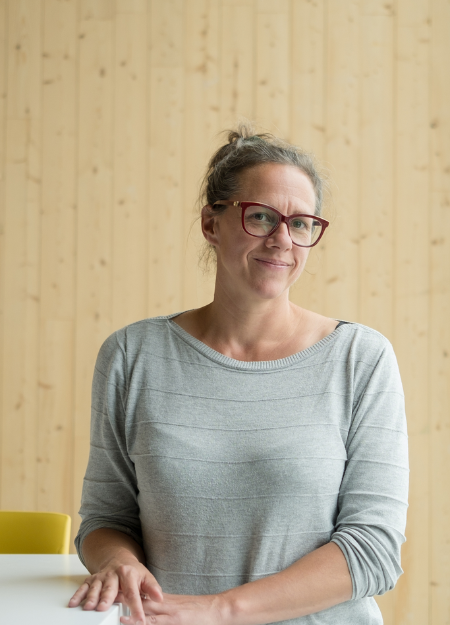
Marie-Luc Arpin has been an Assistant Professor in the Department of Management and Human Resources at the Université de Sherbrooke’s School of Management since August 2020. With a background rooted in engineering, particularly in life cycle assessment, and in the social sciences, she approaches research questions from an interdisciplinary perspective.
Her research focuses on the paradoxical structure and limitations of “problem-solving” in engineering and management. Her main areas of expertise include organizational and social paradoxes—of which rebound effects are a part—the social dynamics of digital technologies, particularly in urban settings, and the epistemological issues surrounding the modeling, measurement, and management of environmental performance.
Her research program aims to better understand the growing complexity of decision-making and the role of decision-makers today (for example, in the face of the climate crisis), as well as to design strategies that enable organizations of all kinds to navigate this complexity effectively.
Marie-Luc Arpin has been an Assistant Professor in the Department of Management and Human Resources at the Université de Sherbrooke’s School of Management since August 2020. With a background rooted in engineering, particularly in life cycle assessment, and in the social sciences, she approaches research questions from an interdisciplinary perspective.
Her research focuses on the paradoxical structure and limitations of “problem-solving” in engineering and management. Her main areas of expertise include organizational and social paradoxes—of which rebound effects are a part—the social dynamics of digital technologies, particularly in urban settings, and the epistemological issues surrounding the modeling, measurement, and management of environmental performance.
Her research program aims to better understand the growing complexity of decision-making and the role of decision-makers today (for example, in the face of the climate crisis), as well as to design strategies that enable organizations of all kinds to navigate this complexity effectively.
M.A. (Economics)
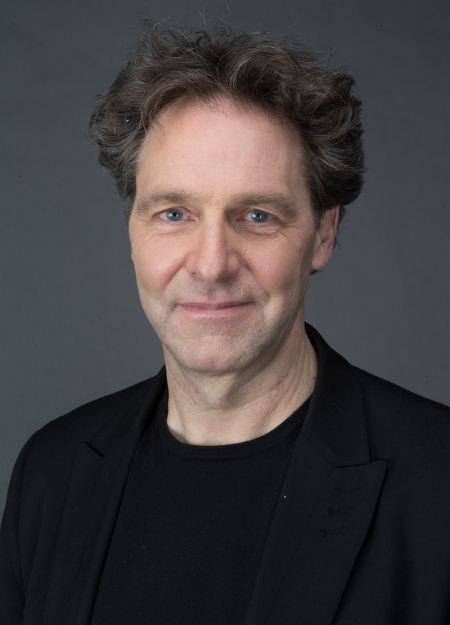
François Delorme is an economist, Associate Professor at the Université de Sherbrooke, and founding president of Delorme Lajoie Consultation Inc. A specialist in macroeconomics, public finance, and environmental economics, he has held senior positions within the federal government, including Chief Economist at Industry Canada and Director General at the Department of Finance, as well as at the OECD in Paris.
His research and professional activities now focus primarily on environmental economics and public policies related to the ecological transition. From 2017 to 2021, he served as a review expert with the Intergovernmental Panel on Climate Change (IPCC), and he regularly contributes to research on inequalities and sustainable development with the World Inequality Lab.
Author of numerous scientific and popular science articles, he also collaborates on works intended for a broader audience, aiming to make the complex connections between the economy, society, and climate more accessible. Through his research, teaching, and consulting activities, François Delorme brings his expertise to public decision-makers, industries, and civil society organizations.
François Delorme is an economist, Associate Professor at the Université de Sherbrooke, and founding president of Delorme Lajoie Consultation Inc. A specialist in macroeconomics, public finance, and environmental economics, he has held senior positions within the federal government, including Chief Economist at Industry Canada and Director General at the Department of Finance, as well as at the OECD in Paris.
His research and professional activities now focus primarily on environmental economics and public policies related to the ecological transition. From 2017 to 2021, he served as a review expert with the Intergovernmental Panel on Climate Change (IPCC), and he regularly contributes to research on inequalities and sustainable development with the World Inequality Lab.
Author of numerous scientific and popular science articles, he also collaborates on works intended for a broader audience, aiming to make the complex connections between the economy, society, and climate more accessible. Through his research, teaching, and consulting activities, François Delorme brings his expertise to public decision-makers, industries, and civil society organizations.
A partner of:
